
Selfless good deeds don't exist
Do you feel good about being good to not-so-good and good people? Selfish prick.

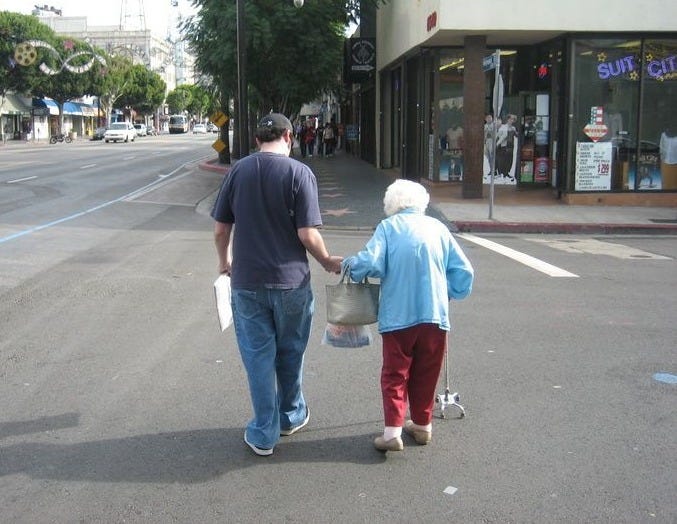
I recently read a book that influenced this essay even further. I assure you, out of everything I’ve written, this is the most important essay. It might save whatever is left of the human souls. I will provide some contextual image of my present, I think it’s important that I do so, influence is nothing to be ashamed of.
As of right now, a post I wrote last October or so has more than ten thousands likes alone. Over 50 thousand views and comments flooding. Any new reader that subscribes is likely subscribing due to that post alone, which does not bother me of course, but I feel somewhat detached from who I was when I wrote that essay. It appeals to everyone. It has no political restraints, and no opinionated compass that could prevent someone from reading it. It’s…okay. I don’t think I can bring myself to write something so neutral as of right now though. Maybe I’ll write something like that in the future, but I’m sorry to disappoint.
Right outside the Palace of Westminster today, there are hundreds of people gathered fighting for Gaza with flags and signs. They are getting arrested, and they are plucked like stubborn worms one by one off that green field. When I came to London for the first time, the crisis and war in Ukraine had just started. In the exact same place, people gathered again to fight for Ukraine. Signs, flags, and posters all the same, only nobody was arrested. Both fight against wars, but one of them is far less problematic. Why can’t war be war, with no color and no context? Because we are in a selfish pyramid scheme.
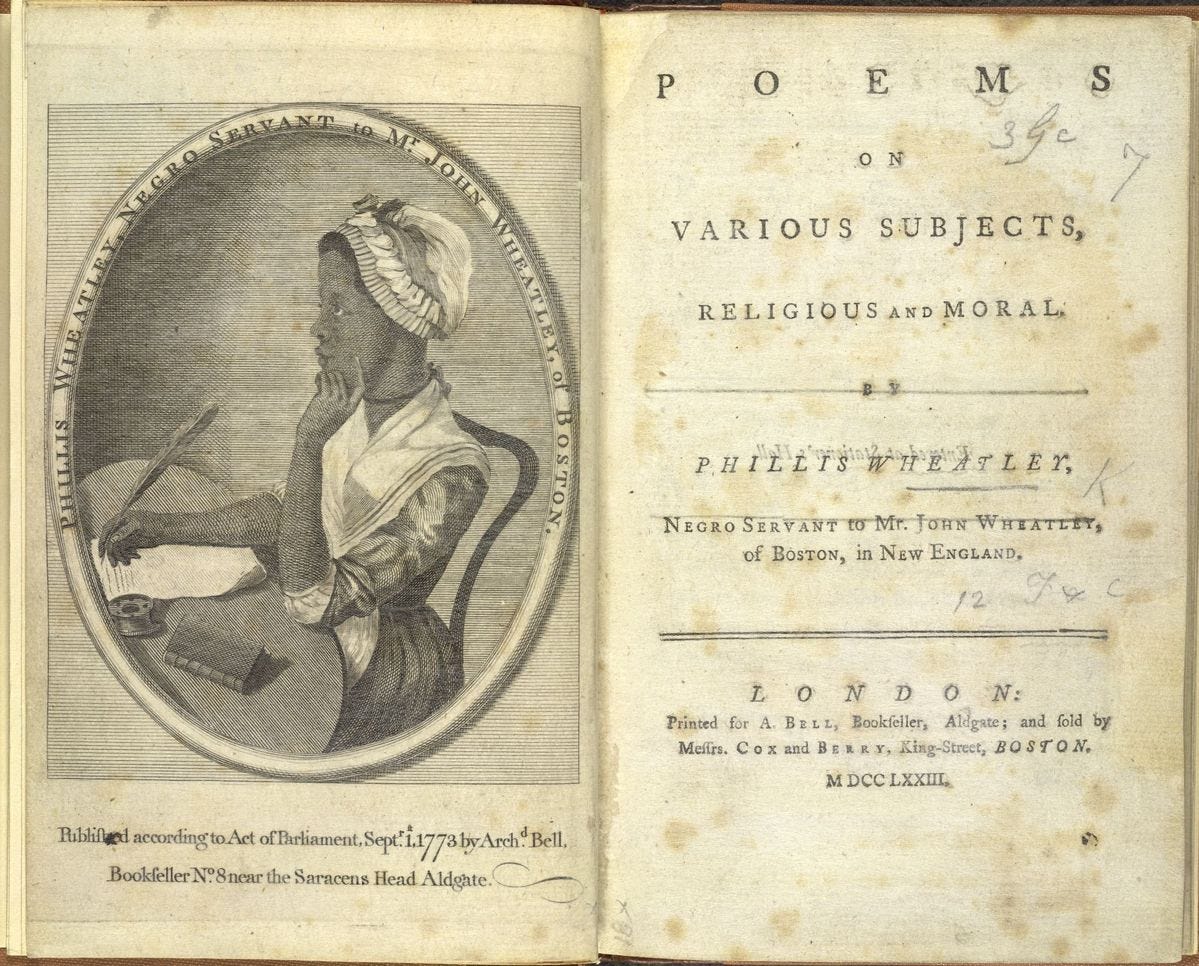
This is Phillis Wheatley. If you aren’t familiar, she was an extraordinary poet and was the first black American woman to ever publish a book in 1773. She was born some time in the 1750’s in Africa. When she was seven years old, she was captured, enslaved, and brought over to the land of the free. Phillis’s first name, her actual first name, remains a mystery to even herself. The name of the ship she was transported on was called The Phillis, and the white family that bought her was the Wheatley family in Boston, Massachusetts. Her story as far as history books go is this: The Wheatley family was the good kind of slave owners. They didn’t torture her, and they didn’t whip her. They saw something in her so they educated her. Mrs.Wheatley was especially interested in Phillis and nurtured her into the poet she is today. She helped her learn Latin, Greek, proper English. Phillis started writing poetry, but couldn’t publish the books in America as a black woman. So the Wheatley family traveled to London and published her collection there. Phillis was celebrated and became somewhat of an inspiring icon to all over black women and writers at the time.
Some part of that story is true, but the selfish pyramid scheme won’t allow for all of it to be true.
Phillis was exploited. The Wheatley family were perceived as the saviors who provided this girl with kindness she wasn’t entitled to. They were good owners. Phillis was not successful on her own, The Wheatley’s shared that success, I’d argue more than Phillis herself. What isn’t very popular in the books is that Phillis was still poor. She still starved. She died in poverty along with her infant son. The family didn’t leave her anything. Her success is only recorded to reflect the goodness of the people who enslaved her, not for her poetry or intelligence.
“Phillis Wheatley was exploited and subjected to patronizing white saviourism that only saw her as an approximation to human…Once her utility was fully exploited and exhausted, she was cast out”
Fugitive Feminism—Akwugo Emejulu
What drove this family to educate, travel, help, and provide this woman with mercy when they didn’t have to? Why would someone break out of the societal norms of cruelty for someone who had no voice? Because as horrible as being selfish is, there is nothing more horrible than a selfless being masking his selfishness for his own gain.
The Pyramid
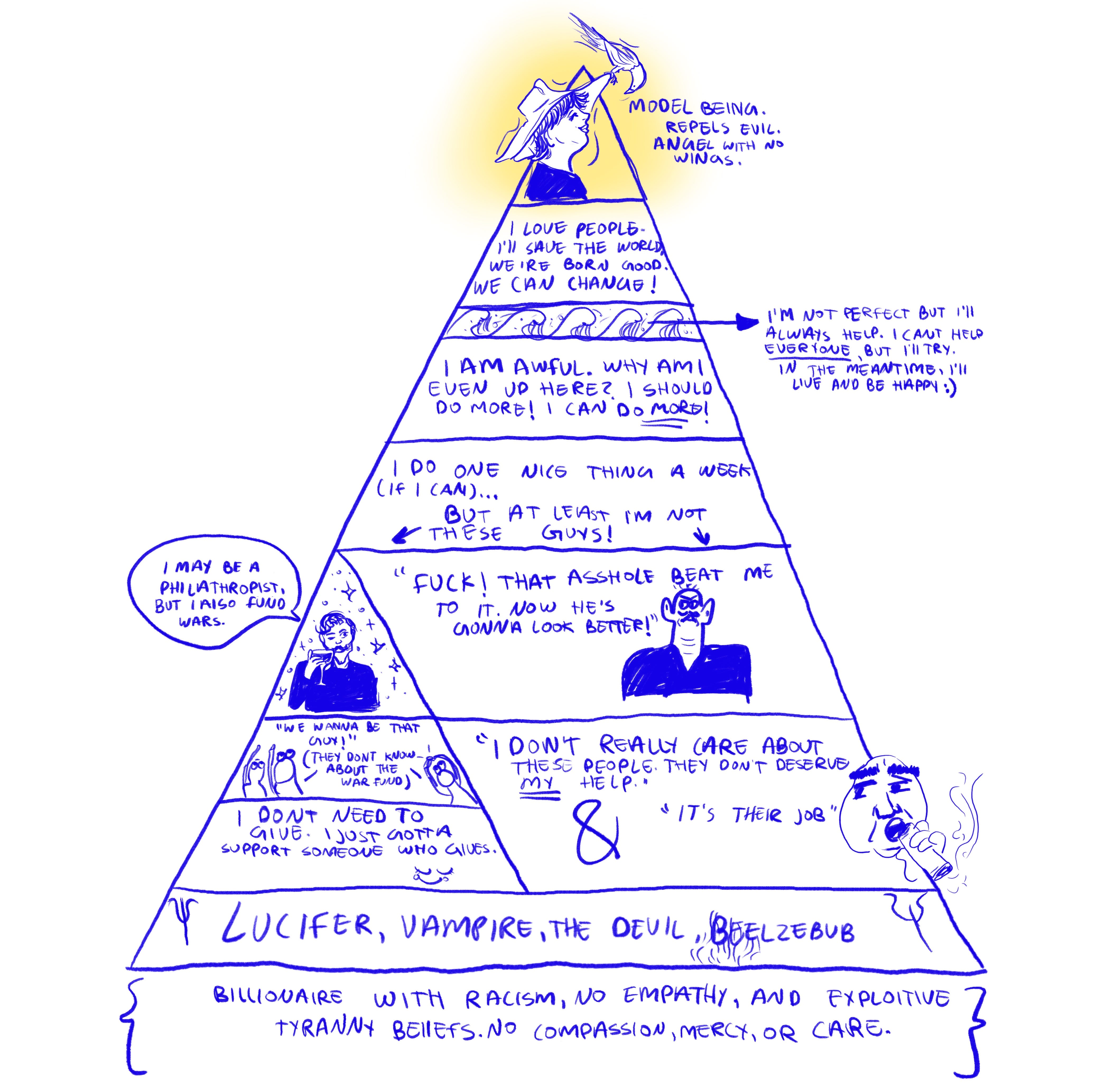
I present to you the pyramid. I apologize for the tardiness, I drew it on the bus. Take a minute or two to digest this. Where do you fall? Once you answer that, think again, and be honest.
If you downplayed how good you are and ranked lower than your initial instinct, you’re likely a tad higher. If you ranked yourself as a model being, then send me $500 and tell Jesus I said hey.
Now here is the real problem I had with ranking myself. I want to say I’m on the border of tier 3 and 4. Right on the line. However, I keep running loops around an infinity sign. One circle says that admitting I’m more—as in tier 3—in itself is a sign that I am indeed selfish because how could someone who is genuinely good measure their selflessness as anything numerical. Isn’t selflessness innate, unlimited, natural, something you cannot count? I can’t be selfless and also keep count of how much money I gave away this week, or how many people I’ve helped.
The other circle says, you will always feel good about doing something good. That’s kind of the deal. There is no selfless good deed, you should be proud of yourself for being good. This isn’t a reward system, so if the only true reward you get is the joy that comes with helping someone, then maybe it isn’t so bad to feel it. Maybe you are born good, and it’s the good feeling out of doing goodness is what fuels us to do more good.
Perhaps this is completely unreliable pyramid (it totally is) and there is no true indication. Maybe some days I’m at the bottom and other days I’m right up there with the stars or something. When something horrible happens down the road or under the rubble in Gaza, we think ‘why would anyone do such a cruel, vile thing?’. I don’t think we ask ourselves why anyone does something good. Why do you help this man? Why do you give to charity? Why are you bothering yourself with this essay?
Gary asked me this question. To give some context, Gary came up to me a while ago for a cigarette. He is a 48 year old man who works in construction. He was not a good kid in school, but he’s brilliant in math. Gary also wanted to kill himself that day he came up to me, but our conversation convinced him otherwise. His favorite book is Papillon by Henri Charrière and he only watches thriller films. He’s doing pretty well, he says hello when we run into each other. So he asked me “Why did you give me a hug and trust me? I could’ve been a creep”. To which I said, “I guess I just hoped you weren’t”.
You have to be good. Even if you’re good for the sake of your own selfish feeling, ride that high. I sometimes feel guilty seeing Gary. I don’t say this to seem humble (I hate that word), I say this because it’s true and I could care less if you think I’m a phony. I feel guilty about how good it makes me feel to see Gary alive and well. I avoided him on purpose because I didn’t like how often he mentioned that I ‘saved him’. Because I don’t feel like a savior, and he does not owe me his life. I was just there. He was just there.
I do want to point out that sometimes riding the high of being good can get too addicting that you exploit whoever you were nice to. The Wheatley family might have started to treat Phillis as a writer, human, and woman to be nice. But I do believe that the amount of attention and superiority this gesture gave them got too addicting. To be applauded, to be seen as a prime example, to be viewed as the savior, to hear someone mutter “I wish I was that good at being good”. That in itself pushes you down the pyramid. You start being good for fame, attention, money, love, and even to seem like the model being. This is why some people choose to be good when it’s really visible and busy. They choose their moments. They want to be good when there is the most amount of people watching. They want to seem good, they want to seem really really good. I would argue that being good counts more when there is the least amount of people watching, maybe when you aren’t even watching yourself.
So is there a selfless good deed? No. Not entirely. I feel really good when helping someone with directions or even lifting a bag. I feel good when someone leans on me, I feel good when I pay for someone’s coffee because they don’t have enough change. But I feel guilty for feeling good. I should feel nothing when doing something nice, that’s the only way it’ll count, right?
Wrong.
Be good and feel good about being good. As long as it’s in there, as long as it keeps you going, why would it be bad? Be a little selfish if it means being selfless. I assure you it’s better than storming up that pyramid pretending to be the best humanity has to offer. I assure you it’s better than doing nothing at all. Maybe feeling good after giving your spare change is humanity calling. And maybe you doing it again, even with nobody watching, is your soul answering.
Be good. Always, always, always.
Wow. First off—respect for casually dropping an essay that swings between world politics, 18th century poetry, pyramid diagrams, and construction-worker-Gary’s suicidal ideation like it’s a Sunday stroll through Hyde Park. Honestly, if this is you “not writing neutral stuff,” then I can’t even imagine what your version of “just okay” looks like.
When you volunteer, you start to understand what this means when you’re writing. Triangles are usually a hierarchy of order. Which in your writing, I think is import in the sense of what is good.
For example, even in the context of doing good. Like this church raising a bunch of money for victims of something; like let’s say, a disaster. $1 million dollars.
Well done. Except the pastor shows up in the Mass Care team meeting and brags about all this money they raised. They go on and on, and then the meeting is over.
The team is first responders, food sustainment, incident command and emergency managers. The pastor wasted all the time bragging.
The next meeting. We bought all this stuff for the victims! They should be grateful!
Except the stuff is nothing the victims need. Now the victims have a new problem. What to do with a bunch of stuff they don’t want or need.
So instead of spending time addressing needs, the time is spent dealing with crap.
This pastor bragged about all the good. Raised $1 million dollars. Except it did no good for anyone else who needed it. I’m sure his ego was good and his report of what the $1million was spent on looked good.